
Healing After a Breakup
Reclaim Your Identity, Confidence, and Emotional Stability
If you are a professional woman navigating the aftermath of separation, divorce, or an emotionally
harmful relationship, you don’t need to “just move on.” You need structure, clarity,
and grounded support as you begin healing after a breakup.
If you are a professional woman navigating
the aftermath of separation, divorce, or an emotionally harmful relationship, you don’t
need to “just move on.” You need structure,
clarity, and grounded support as you
begin healing after a breakup.
Healing after a breakup is about more than
moving on. I help professional women reclaim
their identity and self -trust after emotionally harmful relationships. Through steady, structured guidance, you can rebuild confidence, protect your emotional
space, and move forward with clarity.


Healing after a breakup is about more than moving on.
I help professional women reclaim their identity and
self -trust after emotionally harmful relationships. Through steady, structured guidance, you can rebuild confidence, protect your emotional space, and move forward with clarity.
Healing after a breakup is about more than
moving on. I help professional women reclaim
their identity and self -trust after emotionally harmful relationships. Through steady, structured guidance, you can rebuild confidence, protect your emotional
space, and move forward with clarity.
Kassandra Malik
Why Healing After a Breakup
Is Harder Than It Looks

Getting over a breakup is rarely linear. Even when you know the relationship needed to end, emotional attachment, trauma bonding, and identity erosion can linger. Real recovery requires nervous system regulation, structured support, and intentional rebuilding — not willpower alone.
Narcissistic Abuse
Recovery
Structured support for women rebuilding identity after emotional manipulation and control.
Trauma Bond
Recovery
Understand emotional attachment and safely break cycles that make letting go feel impossible.
Repeating Toxic Relationship Patterns
Identify relational patterns and rebuild self-trust to prevent repeating painful dynamics.
You’re Not Weak.
You’re Recalibrating.
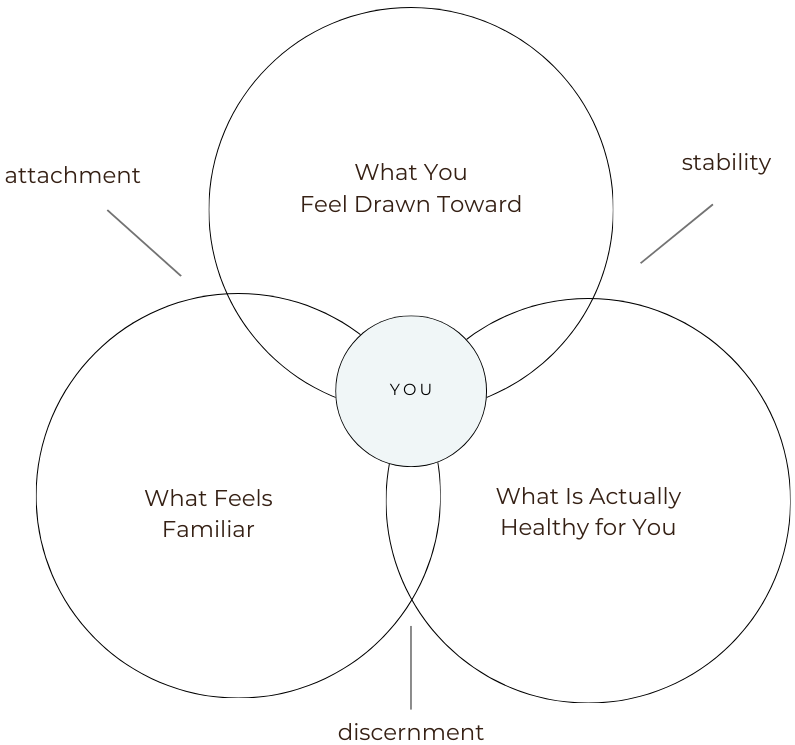

Many women assume Emotional recovery after a breakup should be quick if they are strong, capable, and successful. But when a relationship involved chronic stress, emotional manipulation, or subtle erosion of boundaries, your nervous system adapts.
Healing in this context is not weakness — it is recalibration. This diagram illustrates the tension between attachment, familiarity, and stability. You may feel drawn toward what feels intense or known, even when it isn’t healthy. Discernment becomes the integrating force that helps you separate chemistry from compatibility, and familiarity from safety.
Rebuilding after divorce or separation is not just about closure — it is about restoring agency, clarity, self-trust, and emotional steadiness so your choices align with who you are becoming.
Resources for Healing and Self-Reconnection
Practical guides to help you understand heartbreak, rebuild your identity, and move forward with clarity.

The HEART Cycle Guide
Understand the five emotional
stages of heartbreak — from Hurt to
Transformation — and normalize where
you are in the healing cycle.

6 Pillars of We to Me
A step-by-step starter framework for
emotional processing, boundaries,
self-identity rebuilding, and nervous
system care.

The Self Concept Reset
Learn how your self-concept
shapes relationship patterns and rebuild
confidence through story, evidence,
and environment.
Healing After a Breakup Starts With Reclaiming Yourself
For professional women rebuilding confidence, identity, and emotional stability
after narcissistic abuse, trauma bonding, or divorce.
For professional women rebuilding confidence, identity, and emotional stability after narcissistic abuse, trauma bonding, or divorce.
frequently Asked Questions
Why is healing after a relationship harder than I expected?
Healing often feels harder than anticipated because the attachment doesn’t disappear when the relationship ends. If emotional manipulation, trauma bonding, or long-term stress were involved, your nervous system adapted to instability. True healing after a breakup involves trauma bond recovery, emotional regulation, and identity rebuilding — not just time passing.
A family therapist can be helpful as ofter the relationship ending affects more than one person connected to you. At Healing Me After We, we prioritize you, but we also want to make sure your support system is healing as well. Family members often need time to grieve and heal from negative emotions and the impact of romantic relationships coming to an end. Emotional support isn't just about therapy sessions; your self-esteem and ability to reach acceptance can often be enhanced by your family and friends.
How long does healing after a breakup take?
Recovery is not linear and does not follow a strict timeline. For women navigating narcissistic abuse recovery or emotional abuse healing, recovery can take longer because identity erosion and nervous system conditioning must be addressed. Healing after divorce or separation becomes steadier when structured support is present.
Self-compassion becomes really important as the distance from your ex-partner becomes wider. It is ok to feel sad, feel angry or even feel like you're having a difficult time. We work hard to focus on new things, create healthy boundaries, and in time even start new relationships but being kind to yourself is essential.
Why do I still miss someone who hurt me?
Missing someone after emotional harm is common during trauma bond recovery. Emotional withdrawal after breakup can feel similar to addiction because intermittent reinforcement conditions attachment. Healing after a breakup requires understanding nervous system responses, not shaming yourself for attachment patterns that developed over time.
What is the difference between narcissistic abuse recovery and normal breakup healing?
Narcissistic abuse recovery often involves gaslighting effects, identity erosion, and long-term emotional destabilization. Getting over a breakup that includes emotional manipulation requires more structured emotional abuse healing and relationship trauma healing, not just grief processing. Recovery focuses on restoring self-trust and boundaries.
Why do I keep repeating toxic relationship patterns?
Repeating toxic relationship patterns often stem from early attachment conditioning and familiar relational dynamics. Healing after a breakup provides an opportunity to examine unhealthy relationship patterns and interrupt cycles. Relationship pattern healing requires awareness, nervous system stability, and gradual behavioral shifts.
Is trauma bond recovery possible without cutting contact?
Trauma bond recovery is significantly supported by strong boundaries and, when possible, reduced or no contact. Emotional withdrawal can intensify attachment if the same cycles continue, especially when contact keeps reopening the wound. Real healing becomes more stable when space allows your nervous system to recalibrate without ongoing reinforcement from a former partner.
This can be a difficult time because part of you may still feel pulled back toward the relationship, even though another part of you knows that distance is the right thing. Many people experience self blame, confusion, or the urge to get back together after the relationship ended, especially when the emotional highs and lows have become familiar. Reducing contact is not about pretending the relationship did not matter. It is about giving yourself enough room to fully accept what happened and start feeling safe in your own life again.
Support from friends and family, loved ones, or a professional help provider can make the healing process feel less isolating. A licensed marriage and family therapist or mental health professional can help you understand the grieving process, rebuild self esteem, and create healthy boundaries that protect your emotional recovery.
Over time, this space can help you move into a new chapter, explore new interests, and begin moving forward with more clarity and self compassion.
Can moving on help prevent future toxic
relationships?
Yes. Relationship breakups that include emotional abuse healing and trauma bond recovery strengthen discernment and boundary clarity. When identity rebuilding is prioritized, you are less likely to repeat toxic relationship patterns and more likely to choose emotionally safe connections.
Do I need therapy or is community support enough?
Healing after a breakup can occur through structured community support, especially when focused on identity rebuilding and emotional regulation. Some women may also benefit from individual therapy. A relationship healing community provides steady support after emotional abuse without overwhelming clinical intensity.
Why do I feel anxious even after the relationship is over?
Anxiety after separation often reflects nervous system conditioning rather than ongoing danger. Healing after a breakup includes stabilizing hypervigilance and reducing trauma responses developed during the relationship. Trauma bond recovery and psychological abuse healing gradually restore emotional steadiness.
What does healthy starting over actually look like?
Healthy recovery looks steady, not dramatic; mental health and the healing process takes time, and the grieving process is not the same for everyone. Personal growth as you move on from past relationships is a slow burn but when you spend time focused on your healing journey the break up and recovery will be healthy.
You begin noticing patterns without shame, rebuilding identity, strengthening boundaries, and feeling more confident in decisions. Over time, relationship trauma healing replaces chaos with clarity, and self-trust becomes your internal guide.
Let’s Connect On Social:


© 2026 Healing Me After We. All rights reserved.